UV Resistant Masterbatch for Outdoor Plastic Applications
Functional masterbatch solutions developed to improve UV and weathering resistance in compatible polymer systems according to outdoor exposure, processing conditions and project requirements.
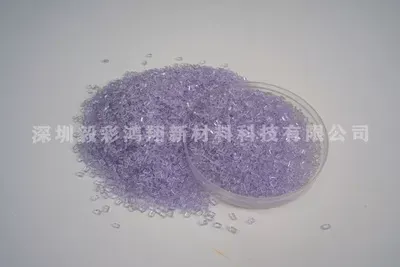
What UV Resistant Masterbatch Does
UV Resistant Masterbatch is an additive functional masterbatch used to introduce a UV and weathering protection direction into a compatible base polymer. It is not a finished compound and is not a material grade by itself.
Functional Masterbatch
Overall functional additive family.
UV Resistant Masterbatch
UV / weathering specific additive.
UV Resistant PP
Final modified PP compound.
ASA
Intrinsically weather-resistant material direction.
UV Performance Requirements We Can Evaluate
Outdoor exposure conditions
Sunlight intensity, geographic region, season length and mounting orientation affect weathering demand.
UV / weathering target
Expected appearance and property retention goals are defined per application, not by a fixed value.
Color / appearance retention
Color stability requirements depend on pigment system, polymer and exposure.
Mechanical property retention
Impact, tensile and other mechanical targets are evaluated against the end-use environment.
Processing conditions
Extrusion, injection molding and processing temperature influence additive selection.
Expected application environment
Automotive, construction, agriculture and outdoor consumer products each have different exposure profiles.
Final formulation and validation criteria are defined per project. No fixed performance value is assumed at the page level.
Polymer & Application Compatibility
| Polymer | Compatibility note |
|---|---|
| PP | Common compatible system for outdoor applications. |
| PE | Suitable for film, pipe and outdoor profiles. |
| ABS | Used in automotive exterior and appliance housing parts. |
| ASA | Already weather-resistant base polymer; stabilization evaluated per project. |
Compatibility depends on polymer type, carrier system, processing temperature, application, exposure and other additives. A single UV masterbatch is not assumed to suit every system.
How UV Masterbatch Is Used
Define the resin (PP, PE, ABS, ASA or other compatible system).
Select a UV / weathering stabilization direction suitable for the polymer.
Add at a project-specific level during compounding or masterbatch let-down.
Process with parameters matched to the polymer and part.
The finished part is evaluated against its defined weathering and appearance targets.
Addition level is project-specific and defined during development.
Outdoor Application Directions
Automotive Exterior Components
Bumpers, grilles, mirror housings and exterior trims for long-term sun exposure.
Building Profiles / Outdoor Construction Plastics
Window profiles, siding, panels and roofing-related plastic parts.
Agricultural Plastic Applications
Greenhouse film, irrigation pipes and outdoor agricultural components.
Outdoor Furniture / Outdoor Plastic Products
Garden chairs, tables, planters and other sun-exposed consumer products.
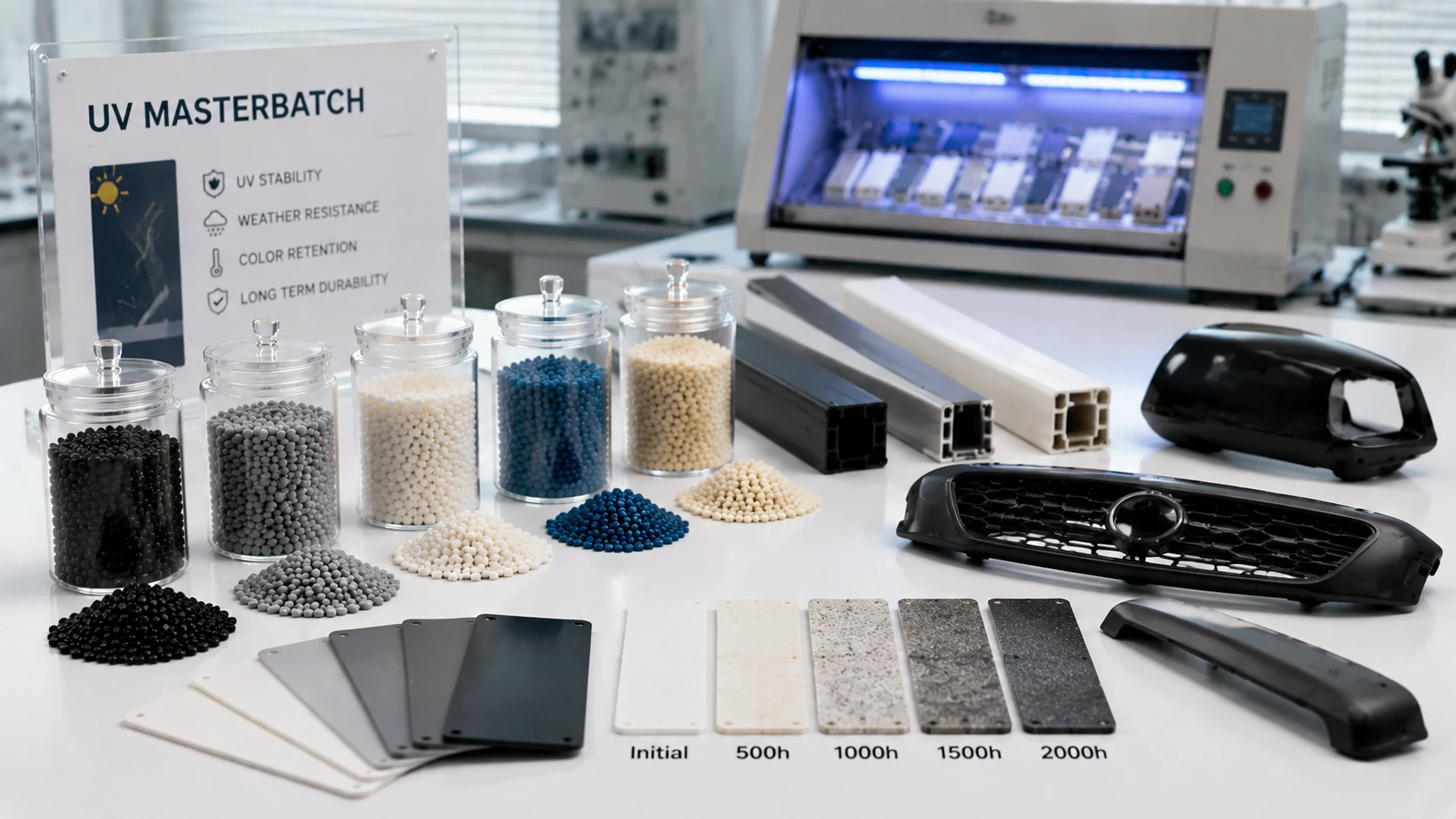
These are application directions suitable for evaluation, depending on polymer system and project requirements.
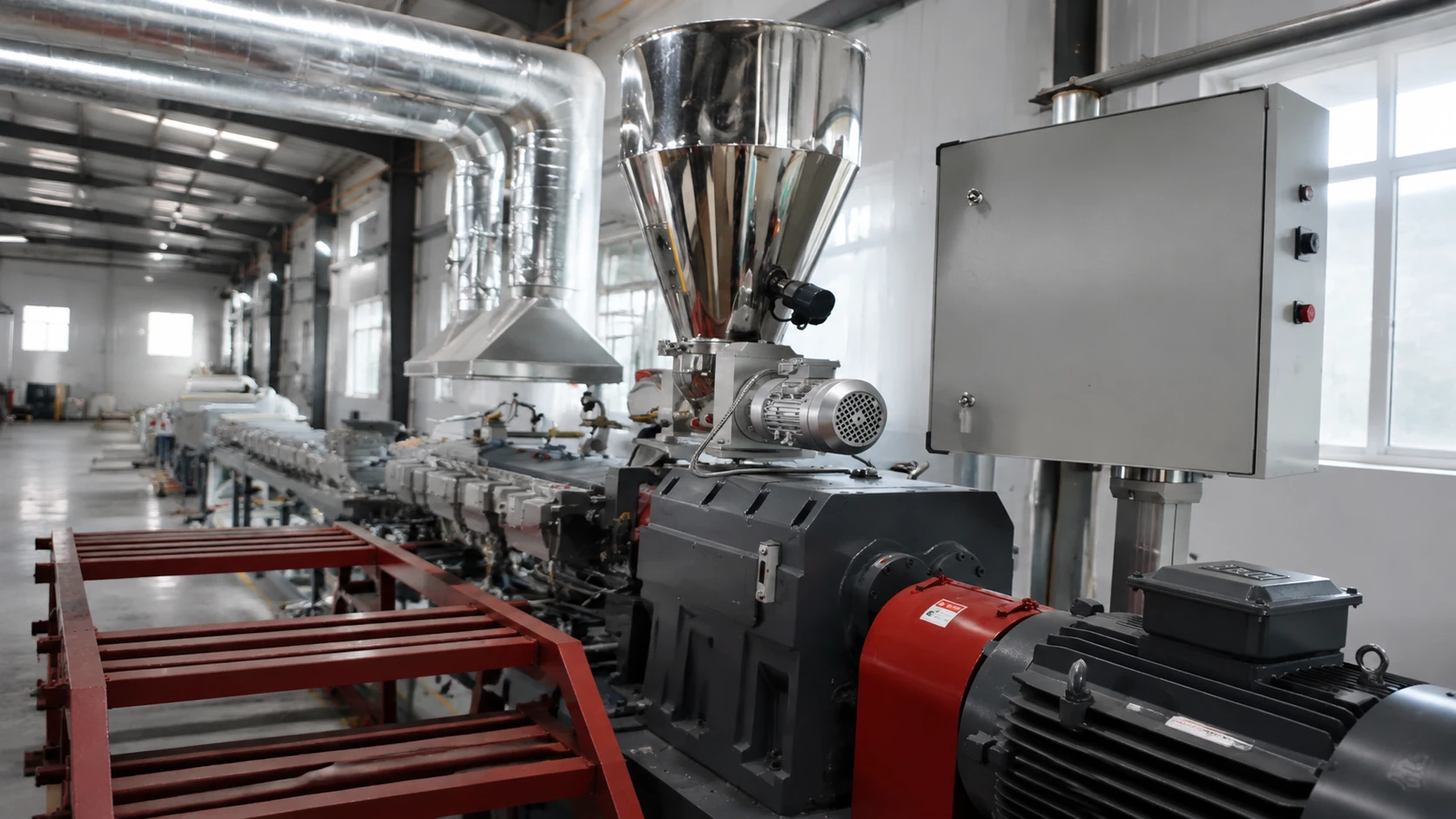
Manufacturing & Quality Control
- Raw material control
- Formulation & dosing
- Compounding
- Pelletizing
- Batch consistency
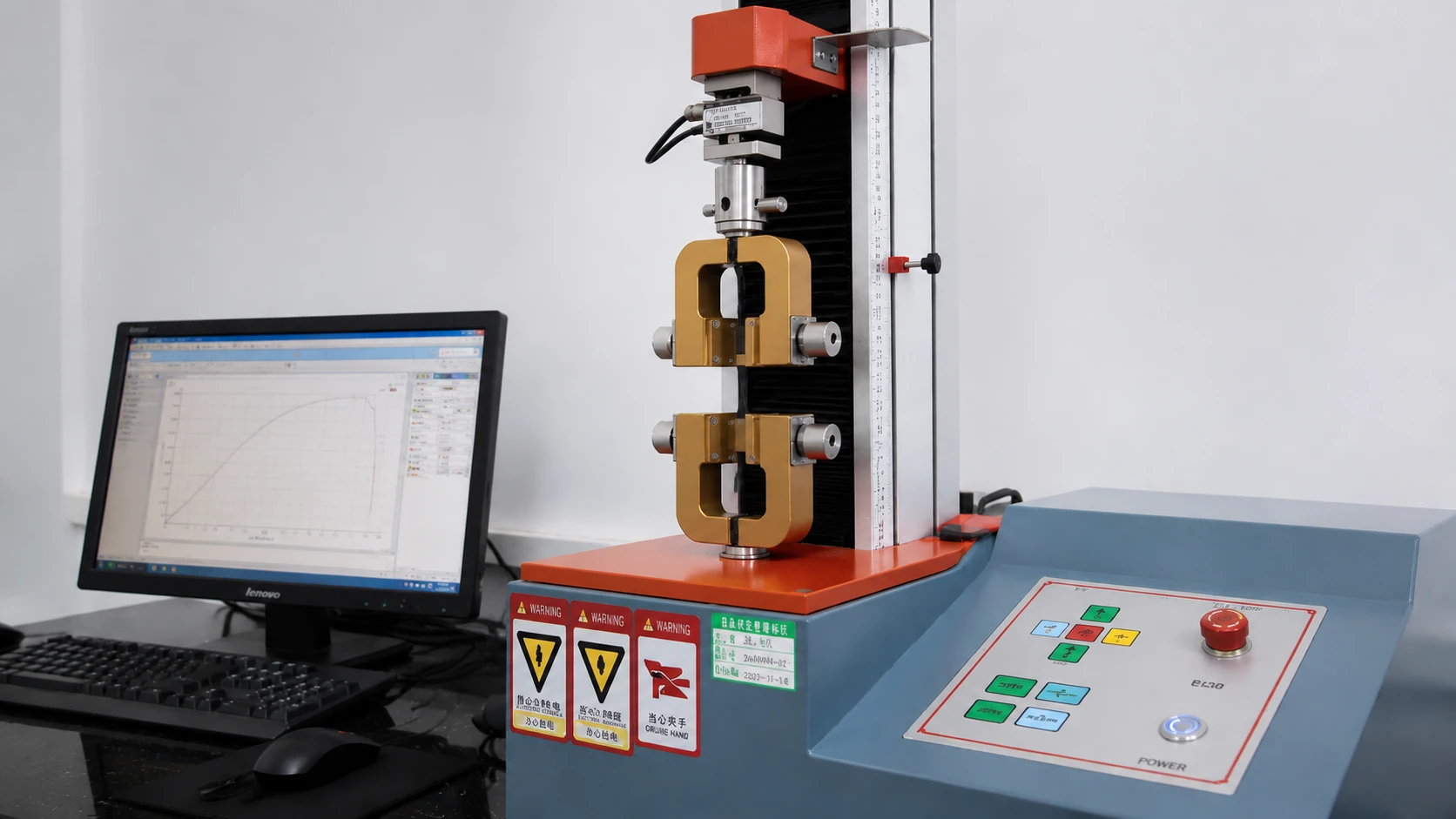
- Performance evaluation
Custom UV / Weathering Development
Resin, application and processing requirements.
Sunlight exposure, temperature and service conditions.
Color and property retention goals.
UV stabilization direction suited to the system.
Appearance, processing and property verification.
Adjustment based on molding or extrusion results.
Transition to commercial supply after validation.
No fixed service-life years are defined. Validation targets are agreed per end use.
Related Solutions
Functional Masterbatch
Functional additive family including UV, antimicrobial and light diffusion directions.
→UV Resistant PP
Final UV-modified PP compound with stabilization.
→Modified Plastics
Custom compounds according to application requirements.
→Color Masterbatch
Plastic coloring without primary UV intent.
→Outdoor Plastics
Materials and solutions for exterior-exposed applications.
→